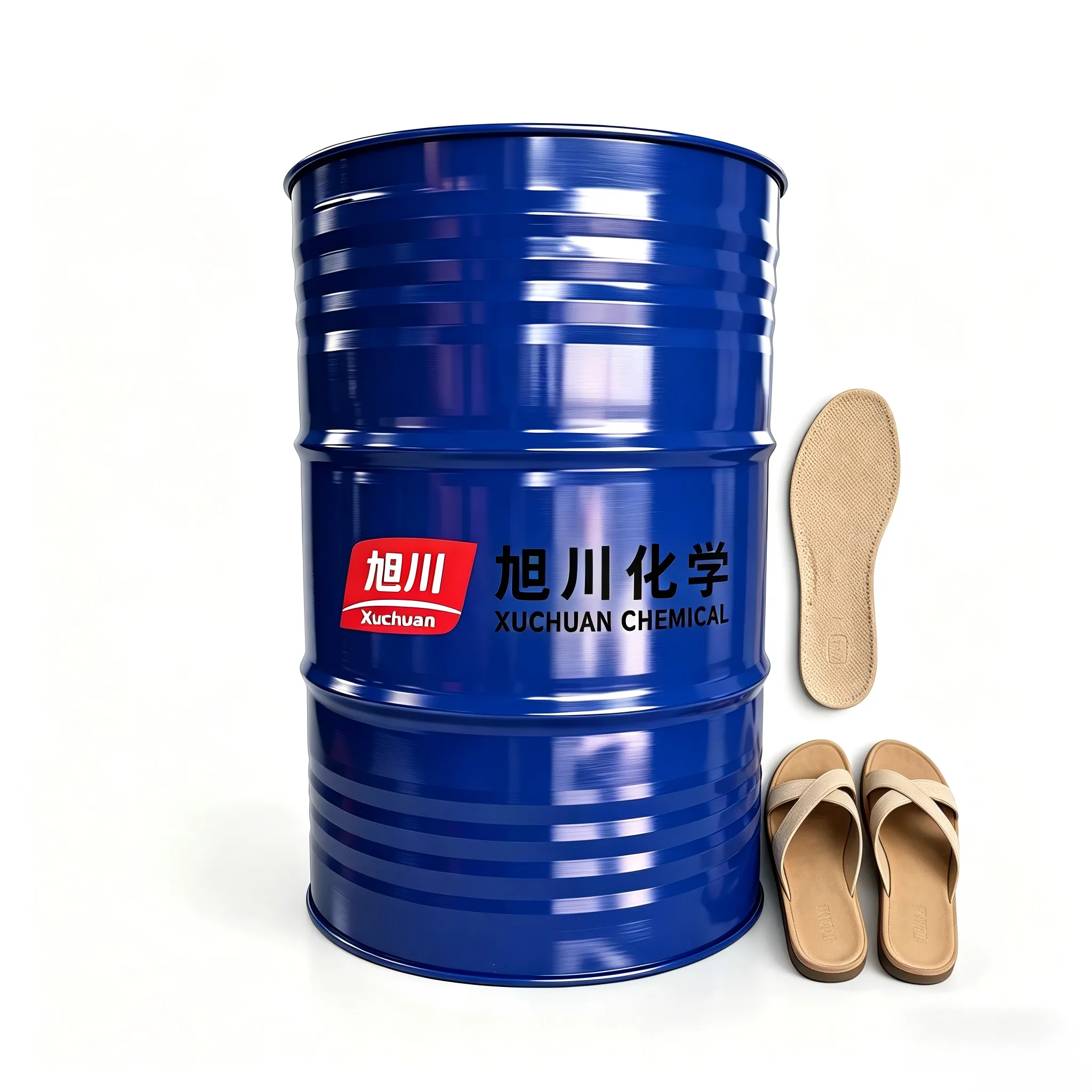
Description
Typical Reaction Parameters
| Items | A/B Materials Temperatures(℃) | A+C+60H20/B Mixratio(By weight) | Cream Time(s) | |
| Parameter | 40-45/38-42 | 100/69-71 | 6-8 | |
| Items | End of Rise Time(s) | Free Rise Foam Density(g/cm³) | Mold Temperature(℃) | Demold Time(s) |
| Parameter | 35-50 | 0.14-0.21 | 45-55 | 3-5 |
1.The adding content of C-2 should be 300±10g/18kg
2.The adding content of water should be 0-90g/18kg according to the reality
3.The adding content of hardener should be changed according to the reality
| Items | Molded Density(g/cm³) | Hardness (Shore C) | Tensile strength(Mpa) | Elongation(%) | Tear Strength(kN/m) |
| Physical Properties |
0.28-0.40 | 28-50 | 1.5-2.8 | 380-450 | 9-15 |
1.Demold time may be prolonged with the increase of sole thickness
2.These physical data are acquired by testing a sample of 6mm thick
3.Data listed above are just for reference. The detail data are subjected to practical production. If other requests for physical properties, please contact us.
Advantages
1.Excellent soft touch and comfort
Provides a soft touch, enhancing comfort for insoles and midsoles.
2.Smooth and fine surface
Uniform foam structure ensures a smooth surface and better appearance.
3.Low density & lightweight
Low free-rise density reduces overall shoe weight.
4.Low hardness with good elasticity
Balances softness and support for better cushioning performance.
5.Balanced mechanical properties
Offers good tensile strength, elongation, and tear resistance.
6.Good processing performance
Reasonable reaction time and fast demolding for efficient production.
Applications
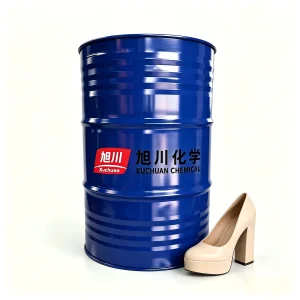
1.Insole
Provides cushioning and comfort for various footwear.
2.Midsole
Used for shock absorption and support in midsoles.
End-use Applications
1.Sports Shoes
2.Running Shoes
3.Comfort / Functional Footwear